The Hidden Potentials in Existing Homes! How Older Homes Can be Reimagined to Become Light‑Filled, Comfortable and Energy‑Efficient Through Retrofit
A Design‑Focused Exploration of Space, Light and Materiality
Across the UK, the post war housing stock is entering a new architectural chapter. Although often modest, cellular, poorly insulated and inward‑looking, these properties offer generous footprints and internal volumes within established neighbourhoods and with genuine potential for transformation. Many nevertheless face challenges—ageing fabric, inadequate insulation, draughty interiors, poorly ventilated roof voids, and worst of all compartmentalised layouts that restrict daylight, views, flow and an open relationship between the interior and the garden.
A design‑led retrofit can reframe these houses as adaptable homes for contemporary living with a strong connection to garden and offering inside outside living. Strategic interventions, re-organisation of the accommodation and consolidation of ancillary spaces such as bathrooms, utility spaces, storage and guest facilities are some of the key moves that can be adopted to create a reimagined and efficient layout that allows the opening up of the house along the garden edge, allowing main living spaces to expand and breathe. Considered placement of rooflights and openings are other devices that can transform transitional areas into moments of spatial delight, celebrating natural light not only as a functional element but as a primary design material.
Extensions, too, are most effective when conceived as part of a holistic reimagining of an existing home rather than simple additions. An L‑shaped extension that wraps east and south, for example, can choreograph morning and afternoon light while strengthening the visual and physical connections to the garden. Extended eaves, verandas or covered thresholds create sheltered, transitional zones—spaces that blur the boundaries between indoors and outdoors and respond sensitively to seasonal changes. This approach supports biophilic principles, fosters stronger engagement with the landscape and aligns with contemporary residential design values.
Materiality plays an equally central role in the re-design and retrofit of an existing house. Durable, low‑maintenance external materials such as zinc cladding, composite cladding and triple glazed aluminium glazing systems can elevate both performance and an architectural language that responds to context. Soft, warm interior finishes create a sense of calmness and cohesion, grounding the home and helping it feel simultaneously modern and enduring.
Through careful architectural reinterpretation, the once‑ordinary post war houses can evolve into elegant, light‑filled and materially rich contemporary homes—demonstrating that retrofit can be every bit as exciting, inspiring and transformative as new build.
A Real‑World Example
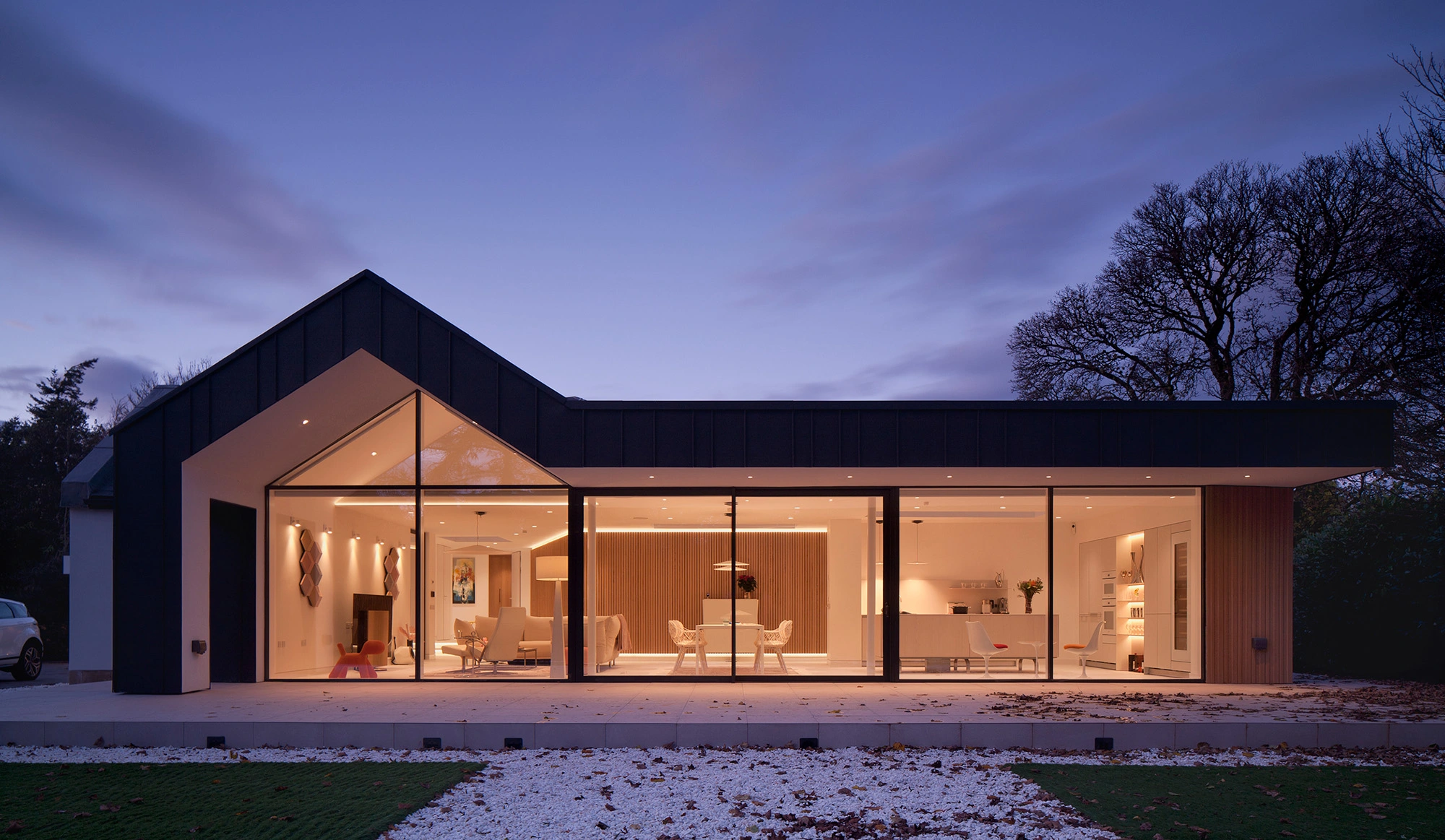
These design‑led principles are not only theoretical; we have applied them directly in one of our own residential projects. In this particular home, by consolidating utility spaces, storage and guest facilities into a compact and efficient central core, the plan of the house has been opened up at the perimeters, allowing the main living space to expand into a singular south facing expansive volume overlooking the rear garden through the floor to ceiling glazed wall and a cantilevered roof providing protection from solar gain and the rainy Scottish weather. The new L-shaped wrap around extension in this example has been devised to not only meet client’s brief in terms of additional floor space but also to conceive circulation as a space that you move through with no dead ends, punctuated by daylight and views. The result demonstrates how design-led retrofit strategies can elevate light, spatial experience and connection to the landscape within an existing 1980s property.
You can explore the project here: